
Friday, 13 June 2014

Wednesday, 28 May 2014
My latest addiction
 |
| These days, I have been mostly eating Werther's Originals (sugar-free of course) |
Sunday, 25 May 2014
Busy Bee
I've a lot on at the moment, which is good in one way as it keeps me healthy and has a positive effect on my well-being. At the moment, I am busy writing a funding application for the support group I help run. Each year, a pot of money is made available for groups that promote mental health and support people who suffer with mental illness. Last year, we were awarded a significant amount of money which paid for arts, crafts and computer based projects. This year, we have decided to focus on outdoor activities and an a new Open Space Garden project at our base in Spalding. The project will provide a working garden and greenhouse enabling our members to grow their own herbs, fruit and vegetables. At the same time, they can learn about raising produce from seed and the the health benefits of eating fruit and vegetables. It is a project likely to go down well with our funders and I'm hoping also that funds will be made available for us to provide a comfortable, welcoming space in which our members can relax and enjoy the garden they have created for themselves. We won't know if we have been successful until September/October, but the application has to be submitted by the end of this month. We have made a start on the project in the hope that we will secure further funding. With the weather so good (at the moment), we're keen to get out there and make a start.
I'm pleased to say that I'm on course for having everything ready for submission on Friday by the 5pm deadline. We (the committee) had a very good meeting yesterday and agreed everything I have done so far. I just need a few lines written about one of the projects we're proposing and for someone to get back to me with one or two prices. Our costs are already over £9,000 and I still need to sort out the insurance for the bus which will cover public liability and when it's on the road and in storage. There's quite a bit yet to do, but I'm quite used to doing these applications now and I have a routine that seems to work for me so that's all good.
Another school half term break is upon us. I really can't remember having this many breaks when I was at school - in fact all I can remember is the long summer holiday. My son will be spending a lot of time with me this coming week and when I'm busy with group, he'll be with his mum at work or with his nanny and granddad.
I normally have to moan about something nowadays. I'm sure it's part of growing older and my wife would happily tell you I've turned it into something of a hobby... At the moment I'm moaning about the lack of service we are receiving from our telephone provider. Since Thursday we have been without a working land line phone. I'm sure it has something to do with the storms we had on Thursday, though although the phone doesn't work, we still have working broadband on the same line. It's all pretty odd. It's now the third day and our service provider has done nothing. It's only when I complain on Facebook or Twitter do I get a response. They don't like it as they don't want the rest of the world to know how bad they are, but should we really have to revert to shaming them? Is that how to get value for money and the service we pay for nowadays? It would seem so. It's certainly the only way to get them to respond and I'm sure they have people whose job it is to monitor social media, for a response can often appear in seconds. If only they could learn to value their customers, now that really would be something... Moan over.
Sunday, 30 March 2014
Looking back on March
I've decided to briefly reflect on the past month of March - my thoughts on a month when so much happened, not all of it good. Of course the last month will be remembered for two main events - the loss of Malaysian flight MH370 and Russia's intervention in Crimea - two events we thought were impossible in 2014.
We have been reminded that despite the wonders of modern day technology which track our every movement, it is still possible to lose an aircraft laden with passengers and crew. I have no doubts that everything possible is being done to locate the aircraft, though I can't help thinking that simple things could have been done to make the task a whole lot easier. One suggestion has been to make the 'black box' flight recorder float and the other has been to make the locator beacon more powerful with greater range and longer battery life. Both of these are easy to implement. In fact they were recommended some time ago but have yet to be acted upon.
March was also the month when East confronted West over Ukraine and Russia annexed Crimea in a move that risked returning us to the dark and fearful days of the Cold War. The question on everyone's lips was whether Russia would encroach deeper into Western Ukraine and other ex-Soviet states. Such a move would undoubtedly provoke a response from NATO which could easily lead to a full-on confrontation with all the dangers that would bring. It was all frankly unthinkable but everyone was wondering where it would all lead, though few dared talk about it. Thankfully, they are talking - the Russians and Americans that is, and this is good. Regardless of who called who, the only answer to this mess is through diplomacy and there is still hope that a solution can be found though I suspect relations will have been damaged for a long time to come. I always find in these situations, it is good to get the perspective of other news outlets for a balanced view on what is really going on. It is so easy to believe everything we see and hear. Look beyond our shores and we find a different view and perspective on events.
March was the month when I started insulin injections. I've been diabetic for some time now and it was controlled by various tablets quite well. I was always told that diabetes is something that will gradually get worse and more difficult to control so I knew it was only a matter of time before I would need insulin. I'm used to injecting - I've been on Lyxumia for some time and its appetite suppressing effect has allowed me to lose a lot of weight. Unfortunately as my weight has reduced, my blood sugar level has increased. I'm currently on 18 units of insulin each day and this is increased by two units every two days until my morning blood sugar reading is at or below 7.0 mmol. A treat of a cream cake earlier today sent my blood sugar level to 23.5 mmol, a stark reminder of how easy it is to give in to temptation and for my body to react - in my case with countless visits to the loo.
This month saw our bus project begin. We were able to draft in some extra help enabling us to access the engine for the first time and to attempt to charge the batteries.


Sadly the batteries won't hold any charge so we have issued a plea for replacements and a mechanic to give the engine the once-over prior to getting the bus MOT'd. I'm reminded that we have a 'long road ahead of us' but with more people involved, the more likely we are to get her back on the road where she belongs.
March 22nd was the day my brother-in-law married his childhood sweetheart at a ceremony held at Orton Hall in Peterborough. It was a day I will certainly never forget and I will remain forever proud of my son who performed his duty as ring-bearer perfectly.

Despite an ominous forecast, the weather for the ceremony and the photographs that followed was just right providing a bright blue sky for an already stunning backdrop. It really couldn't have been better.
Finally, today was the day that the clocks changed and we woke this morning to find that our 8 O'Clock's were 9 O'Clock's and our 9 O'Clock's were 10 O'Clock's and that we'd missed Broadcasting House. The people of Crimea woke to find that their 8 O'Clock was in fact 10 O'Clock having joined 'Moscow Time', thus cementing their reunion with the Russian Federation. I confess still getting used to it and as I glance out of my office, I see that it is still quite light. Despite having changed all the clocks in the house, there will still be one that I've missed! Farewell March. You reminded us of how big the world still is and that we have changed little in the last 25 years.
We have been reminded that despite the wonders of modern day technology which track our every movement, it is still possible to lose an aircraft laden with passengers and crew. I have no doubts that everything possible is being done to locate the aircraft, though I can't help thinking that simple things could have been done to make the task a whole lot easier. One suggestion has been to make the 'black box' flight recorder float and the other has been to make the locator beacon more powerful with greater range and longer battery life. Both of these are easy to implement. In fact they were recommended some time ago but have yet to be acted upon.
March was also the month when East confronted West over Ukraine and Russia annexed Crimea in a move that risked returning us to the dark and fearful days of the Cold War. The question on everyone's lips was whether Russia would encroach deeper into Western Ukraine and other ex-Soviet states. Such a move would undoubtedly provoke a response from NATO which could easily lead to a full-on confrontation with all the dangers that would bring. It was all frankly unthinkable but everyone was wondering where it would all lead, though few dared talk about it. Thankfully, they are talking - the Russians and Americans that is, and this is good. Regardless of who called who, the only answer to this mess is through diplomacy and there is still hope that a solution can be found though I suspect relations will have been damaged for a long time to come. I always find in these situations, it is good to get the perspective of other news outlets for a balanced view on what is really going on. It is so easy to believe everything we see and hear. Look beyond our shores and we find a different view and perspective on events.
March was the month when I started insulin injections. I've been diabetic for some time now and it was controlled by various tablets quite well. I was always told that diabetes is something that will gradually get worse and more difficult to control so I knew it was only a matter of time before I would need insulin. I'm used to injecting - I've been on Lyxumia for some time and its appetite suppressing effect has allowed me to lose a lot of weight. Unfortunately as my weight has reduced, my blood sugar level has increased. I'm currently on 18 units of insulin each day and this is increased by two units every two days until my morning blood sugar reading is at or below 7.0 mmol. A treat of a cream cake earlier today sent my blood sugar level to 23.5 mmol, a stark reminder of how easy it is to give in to temptation and for my body to react - in my case with countless visits to the loo.
This month saw our bus project begin. We were able to draft in some extra help enabling us to access the engine for the first time and to attempt to charge the batteries.
Sadly the batteries won't hold any charge so we have issued a plea for replacements and a mechanic to give the engine the once-over prior to getting the bus MOT'd. I'm reminded that we have a 'long road ahead of us' but with more people involved, the more likely we are to get her back on the road where she belongs.
March 22nd was the day my brother-in-law married his childhood sweetheart at a ceremony held at Orton Hall in Peterborough. It was a day I will certainly never forget and I will remain forever proud of my son who performed his duty as ring-bearer perfectly.
Despite an ominous forecast, the weather for the ceremony and the photographs that followed was just right providing a bright blue sky for an already stunning backdrop. It really couldn't have been better.
Finally, today was the day that the clocks changed and we woke this morning to find that our 8 O'Clock's were 9 O'Clock's and our 9 O'Clock's were 10 O'Clock's and that we'd missed Broadcasting House. The people of Crimea woke to find that their 8 O'Clock was in fact 10 O'Clock having joined 'Moscow Time', thus cementing their reunion with the Russian Federation. I confess still getting used to it and as I glance out of my office, I see that it is still quite light. Despite having changed all the clocks in the house, there will still be one that I've missed! Farewell March. You reminded us of how big the world still is and that we have changed little in the last 25 years.
Wednesday, 12 March 2014

Sunday, 23 February 2014
Ian McNaught Davis & My Computing Evolution
Ian McNaught-Davis passed away last week aged 84. His name won't be familiar to most people but during the 1980's he was a familiar face on TV and more often than not he was promoting the early computers such as the BBC Micro, Acorn and Archimedes. Together with Chris Serle, another familiar face from 80's TV, he hosted in 1983 'Making the Most of the Micro' and earlier 'The Computer Programme'.


Nowadays we look back at these 'museum pieces' the same way we do a vintage car or wind-up gramophone. Their use was often limited to very basic games or simple word processing, but that was all we really needed at the time, and even this seemed amazing.
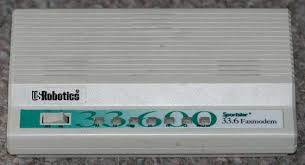
The dial-up modem made it possible for computers to connect to other computers and I recall using early Bulletin Board Services to access local information and news. Many of these were run from people's homes and the slow data rate and call costs made this a very expensive activity.
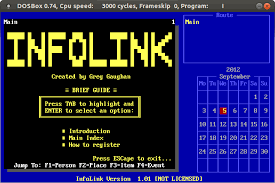
CompuServe was my first portal to the Internet in the early 90's. It wasn't 'true' Internet as we know it now - more a selection of sites made available via a portal. Even then there were just a few hundred sites available, each easily categorised according to content. I recall my excitement at having a whole electronic library of information at my fingertips and would regularly sit up half the night browsing these fledgling sites on my US Robotics 28 kbps modem.

Much of the time was spent patiently waiting for the pages to load, one line at a time, such were the limitations of modem technology back then. However, it worked and it was exciting - a taste of what was to come.
I don't remember when exactly ISDN became available domestically. It had been used by business for many years but for a time, BT marketed it to the general public as 'super-fast' access to the Information Superhighway. In reality, it was two phone lines joined together to give twice the maximum bandwidth. Even wit the two lines, the line speed was only about 256 mbps. By today's standards, this is very low but back in the mid to late 90's, this was high speed and with the limited complexity of sites, pages loaded quickly. This was a major step forward and opened the door to streaming audio and video - albeit at very low definition and bit rate. Most importantly, it worked and it worked well. ISDN wasn't around long enough to be established as a standard for domestic Internet access. It wasn't marketed, it was a lot of work to install, it wasn't user-friendly and it was expensive. The need to dial-up each time meant that forgetting to disconnect after use could mean staying connected for many hours, each minute of which was charged at a premium. I recall one month receiving a bill for £800 simply because I had forgotten to disconnect.
I was a latecomer to ADSL. I had moved from South London in 2001 and in South Lincolnshire, it took another couple of years before it reached me. I moved with my job, then in IT, so I was able to have ISDN re-installed in my new home, and installed again in my current home a few miles up the road. When it finally came, ADSL was a massive leap from ISDN. The biggest bonus for me was the ability to have several computers connected to the Internet simultaneously. Being permanently connected was a good feeling and it was great not having to worry about connecting and disconnecting. I could use my phone at the same time too - something I couldn't do with ISDN or dial-up.
Youngsters growing up with this technology know of nothing else. They are used to the Internet being there, being constantly connected from computer, tablet and mobile. My son will remember the Internet as it is now - fast, dependable and always there. What's next? Well super-fast fibre is the next step and swathes of the UK are being connected right now. As with ADSL, it will take some time before it reaches me. Roll-out is dependent on viability, cost-effectiveness and take-up. In a village of just a hundred or so homes, there won't be anywhere near the demand and for most people, ADSL provides adequate speed and bandwidth. However, even now there are signs that ADSL may be struggling to provide the bandwidth needed. I already see my 7 year old son placing huge demands on our connection to the Internet. He has discovered YouTube and streaming video services such as BBC iPlayer, and with much of it available in high definition, he often 'hogs the bandwidth' and makes it difficult for me to catch up on the latest news or check my bank account. Even now, the quantity and quality of information and media available to us is dictating the way we connect. As the Internet has grown, so too has our demand for what it can offer. The problem is that it grows faster than our ability to connect and feed from it. Perhaps fibre will eventually satisfy all our needs.
So I look back at where we have come from and how fast technology has developed since the first time I heard the high pitch squeal of my modem as it 'shook hands' with another modem in a far off location. We've come a long long way. I wonder what Ian McNaught Davis would be predicting now if those programmes were made again today? Rest in peace and thanks for helping us to understand now what we understood then.
Both were attempts to sell the concept of computers playing an integral role in among the general public and industry. Little did they know back then just how much an impact the personal computer would have on the World and the development of the Internet which now joins these devices to a vast network of information and media. It's difficult to know how influential these programmes were given that computer ownership was extremely low. In the US, ownership was as low as 15% of the overall population. It would be another ten years before things really began to take off. Up to then there had been many attempts at developing a 'standard' home computer and I recall with fondness owning a few of them.
Nowadays we look back at these 'museum pieces' the same way we do a vintage car or wind-up gramophone. Their use was often limited to very basic games or simple word processing, but that was all we really needed at the time, and even this seemed amazing.
Much of the time was spent patiently waiting for the pages to load, one line at a time, such were the limitations of modem technology back then. However, it worked and it was exciting - a taste of what was to come.
I don't remember when exactly ISDN became available domestically. It had been used by business for many years but for a time, BT marketed it to the general public as 'super-fast' access to the Information Superhighway. In reality, it was two phone lines joined together to give twice the maximum bandwidth. Even wit the two lines, the line speed was only about 256 mbps. By today's standards, this is very low but back in the mid to late 90's, this was high speed and with the limited complexity of sites, pages loaded quickly. This was a major step forward and opened the door to streaming audio and video - albeit at very low definition and bit rate. Most importantly, it worked and it worked well. ISDN wasn't around long enough to be established as a standard for domestic Internet access. It wasn't marketed, it was a lot of work to install, it wasn't user-friendly and it was expensive. The need to dial-up each time meant that forgetting to disconnect after use could mean staying connected for many hours, each minute of which was charged at a premium. I recall one month receiving a bill for £800 simply because I had forgotten to disconnect.
I was a latecomer to ADSL. I had moved from South London in 2001 and in South Lincolnshire, it took another couple of years before it reached me. I moved with my job, then in IT, so I was able to have ISDN re-installed in my new home, and installed again in my current home a few miles up the road. When it finally came, ADSL was a massive leap from ISDN. The biggest bonus for me was the ability to have several computers connected to the Internet simultaneously. Being permanently connected was a good feeling and it was great not having to worry about connecting and disconnecting. I could use my phone at the same time too - something I couldn't do with ISDN or dial-up.
Youngsters growing up with this technology know of nothing else. They are used to the Internet being there, being constantly connected from computer, tablet and mobile. My son will remember the Internet as it is now - fast, dependable and always there. What's next? Well super-fast fibre is the next step and swathes of the UK are being connected right now. As with ADSL, it will take some time before it reaches me. Roll-out is dependent on viability, cost-effectiveness and take-up. In a village of just a hundred or so homes, there won't be anywhere near the demand and for most people, ADSL provides adequate speed and bandwidth. However, even now there are signs that ADSL may be struggling to provide the bandwidth needed. I already see my 7 year old son placing huge demands on our connection to the Internet. He has discovered YouTube and streaming video services such as BBC iPlayer, and with much of it available in high definition, he often 'hogs the bandwidth' and makes it difficult for me to catch up on the latest news or check my bank account. Even now, the quantity and quality of information and media available to us is dictating the way we connect. As the Internet has grown, so too has our demand for what it can offer. The problem is that it grows faster than our ability to connect and feed from it. Perhaps fibre will eventually satisfy all our needs.
So I look back at where we have come from and how fast technology has developed since the first time I heard the high pitch squeal of my modem as it 'shook hands' with another modem in a far off location. We've come a long long way. I wonder what Ian McNaught Davis would be predicting now if those programmes were made again today? Rest in peace and thanks for helping us to understand now what we understood then.
Friday, 14 February 2014
Ralph Waite
It's so sad to hear the news that Ralph Waite, famous for his role as the father, John Walton Sr. in the classic 70's CBS TV series The Waltons has died aged 85.

For many my age, he will be remembered for this iconic role though not a year has passed without him being cast in a TV drama role. Most recently, he has starred as Hank Booth in the Fox TV series 'Bones'. A very talented actor and a sad loss.
Subscribe to:
Posts (Atom)
Lynda Bellingham
I was shocked to hear of the passing of Lynda Bellingham on Sunday. I had known she was terminally ill, but I really thought, as did man...

-
 I was shocked to hear of the passing of Lynda Bellingham on Sunday. I had known she was terminally ill, but I really thought, as did man...
-
 Once I post something, I'm aware it's on the Internet for ever more. Wow, what a thought... So for my first post, I'm going to g...
-
 I really love this story on the BBC News site of a letter box that's mysteriously appeared in a bridge at Sonning-On-Thames, Berkshire. ...